

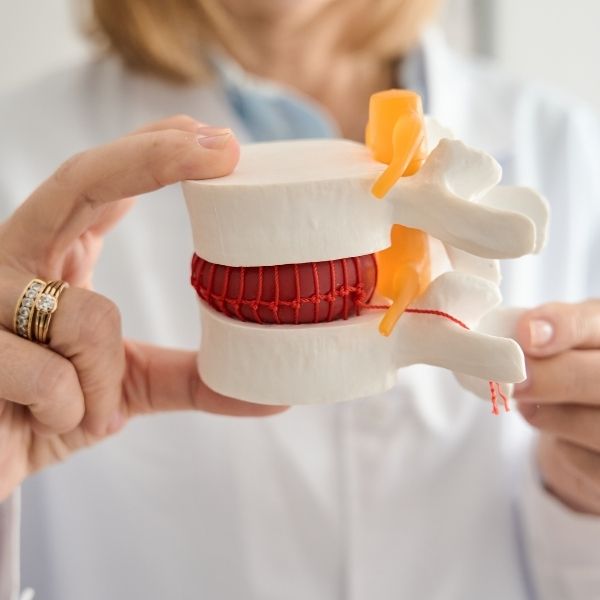
Disc problems—such as herniated, bulging, or degenerative discs—are a common source of back and neck pain for many people in the Dallas–Fort Worth area. These conditions occur when the spinal discs, which act as cushions between your vertebrae, become damaged, weakened, or displaced. This can place pressure on nearby nerves, leading to pain, numbness, tingling, or weakness that may travel into the arms or legs.
Disc issues can develop from injury, repetitive stress, poor posture, or natural wear and tear over time. When left unaddressed, they can worsen and significantly impact your mobility and quality of life. At Back to Health, we take a comprehensive, non-invasive approach to identify the root cause of your disc condition and create a personalized plan focused on relieving pressure, restoring movement, and preventing further damage.
Your care begins with a detailed consultation and exam to understand your symptoms, medical history, and movement limitations. We identify the source of your disc issue and develop a customized treatment plan.
Precise adjustments help restore proper spinal alignment, reduce pressure on affected discs, and improve joint mobility—allowing your body to heal more effectively.
When necessary, digital imaging helps us assess disc spacing, alignment, and structural changes to ensure safe, accurate, and targeted care.
This non-invasive therapy gently stretches the spine to relieve pressure on discs, promote nutrient flow, and support healing—especially effective for herniated or bulging discs.
We address surrounding muscles and connective tissues to reduce tension, improve circulation, and support the spine during recovery.
Targeted exercises are designed to strengthen supporting muscles, improve flexibility, and stabilize the spine—helping prevent future disc issues.
Additional therapies may be used to reduce inflammation, relieve pain, and accelerate healing at the cellular level.
Occurs when the inner portion of a disc pushes through its outer layer, often compressing nearby nerves and causing radiating pain, numbness, or weakness.
A disc bulge happens when the outer layer weakens and extends outward, potentially irritating surrounding nerves and leading to discomfort in the back or limbs.
Over time, discs can lose hydration and elasticity, reducing their ability to cushion the spine and leading to stiffness, pain, and reduced mobility.
Frequent bending, lifting, or twisting motions can gradually strain the discs and increase the risk of injury.
Sitting or standing with improper posture places uneven pressure on spinal discs, accelerating wear and tear.
Accidents, falls, or sudden impacts can damage discs and lead to long-term spinal issues.
Lack of core strength can reduce spinal stability, increasing stress on the discs.
Misalignments in the spine can create uneven pressure on discs, contributing to degeneration or injury over time.
Yes. Chiropractic care can help reduce pressure on affected discs, improve spinal alignment, and relieve nerve irritation—supporting natural healing without surgery.
A bulging disc extends outward but remains intact, while a herniated disc involves a tear where the inner material pushes through. Both can cause nerve irritation and pain.
Recovery time varies depending on the severity and duration of the condition. Some patients improve within weeks, while others may require a longer treatment plan.
No. Many disc conditions can be successfully managed with non-invasive treatments like chiropractic care and spinal decompression.
Activities involving heavy lifting, bending, or twisting should be limited during recovery. Your care plan will include guidance on safe movement.
In many cases, yes. With the right care and support, the body can reduce inflammation and improve function over time.