

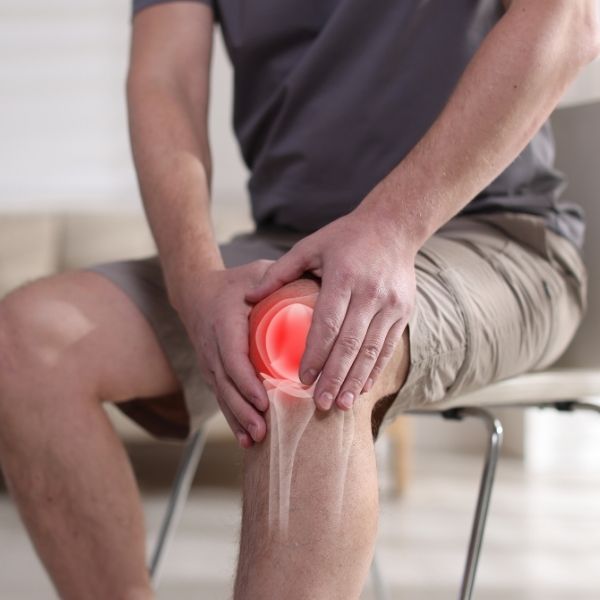
Knee pain is one of the most common musculoskeletal issues affecting people throughout the Dallas–Fort Worth area. Whether it’s caused by an injury, repetitive stress, or conditions like arthritis, knee pain can make everyday activities—walking, standing, climbing stairs—feel difficult and limiting.
The knee is a complex joint that depends on proper coordination between ligaments, tendons, cartilage, and muscles to function correctly. When any part of this system is strained or out of balance, it can lead to pain, instability, and reduced mobility. At Back to Health, we take a comprehensive, non-invasive approach to identify the true cause of your knee pain and create a personalized plan focused on long-term relief and recovery.
Many cases of knee pain don’t actually start in the knee. Issues like hip misalignment, poor posture, or spinal imbalances can place excess stress on the joint over time. That’s why our team evaluates your entire movement system—not just the knee—to correct the root cause and help you move better, feel better, and stay active without recurring pain.
Your care starts with a detailed consultation and exam to fully understand your knee pain. We review your health history, assess movement patterns, and evaluate how your symptoms affect daily activities. From there, we create a personalized treatment plan focused on restoring function and reducing pain.
Knee pain is often influenced by alignment issues in the spine, hips, and lower extremities. Through precise chiropractic adjustments, we improve joint mechanics and reduce abnormal stress on the knee—helping your body heal more efficiently.
When necessary, digital X-rays are used to get a clear view of your joint structure and alignment. This allows us to identify underlying issues and ensure your treatment is both safe and highly targeted.
We address the muscles, ligaments, and tendons surrounding the knee to relieve tension, reduce inflammation, and improve mobility. This helps support joint function and speeds up the recovery process.
Your recovery includes a personalized program of stretches and strengthening exercises designed to stabilize the knee, improve flexibility, and prevent future injuries. These exercises play a key role in long-term results.
This advanced, non-invasive treatment uses light energy to reduce inflammation, relieve pain, and accelerate healing at the cellular level. It’s especially effective for chronic knee pain and injury recovery.
Ligament tears or sprains are common knee injuries, especially among athletes. These injuries cause instability, swelling, and pain, and often result from sudden twisting motions or direct impact to the knee.
The meniscus is the cartilage that cushions the knee joint. Tears can occur from twisting, pivoting, or degenerative wear over time, causing pain, swelling, and difficulty straightening the knee.
Also known as ‘runner’s knee,’ this condition causes pain around and behind the kneecap. It’s often caused by overuse, muscle imbalances, or improper tracking of the kneecap during movement.
Degenerative wear of the knee’s cartilage leads to bone-on-bone friction, causing pain, stiffness, and reduced mobility. This is one of the most common causes of knee pain, particularly in adults over 50.
Inflammation of the tendons around the knee, commonly the patellar tendon, results from repetitive stress or overuse. It causes pain just below the kneecap that worsens with activity.
The iliotibial band runs along the outside of the thigh and can become tight or inflamed, causing sharp pain on the outer side of the knee. This is common in runners, cyclists, and active individuals.
Inflammation of the small fluid-filled sacs (bursae) that cushion the knee joint causes swelling, warmth, and tenderness. Repetitive kneeling, overuse, or direct trauma can trigger this condition.
Yes. Chiropractic care takes a whole-body approach to knee pain. At Back to Health, we evaluate spinal alignment, hip function, and lower extremity mechanics to identify the true source of stress on your knee. By correcting these imbalances, we focus on lasting relief—not just temporary symptom control.
Knee pain can result from ligament injuries, meniscus tears, arthritis, tendon inflammation, bursitis, or muscle imbalances. In many cases, poor posture or misalignment in the hips and spine can also place added stress on the knee, contributing to ongoing discomfort.
Recovery time depends on the cause and severity of your condition. Some patients begin to feel improvement within a few weeks of consistent care, while more complex issues may take longer. At Back to Health, we provide clear timelines and track your progress to ensure steady improvement.
Not always—many cases are related to overuse or minor strain. However, persistent, worsening, or severe knee pain may indicate a more serious issue like a ligament injury or arthritis. A proper evaluation is important to determine the cause and the right course of care.
Low-impact activities such as walking, cycling, and stretching are often beneficial. Strengthening key muscle groups like the quadriceps, hamstrings, and glutes helps support the knee and improve stability. We create personalized exercise plans based on your specific condition and goals.
Ice is typically recommended for swelling or recent injuries, especially within the first 48–72 hours. Heat is more effective for chronic stiffness and muscle tightness. As part of your care plan, we’ll guide you on when and how to use each for the best results.