
Why Neck Pain and Headaches Increase During the School Year
Long study sessions, screens, heavy backpacks, stress, and short nights all stack up once school starts. Here's why neck pain and headaches spike during the school year — and what actually helps.
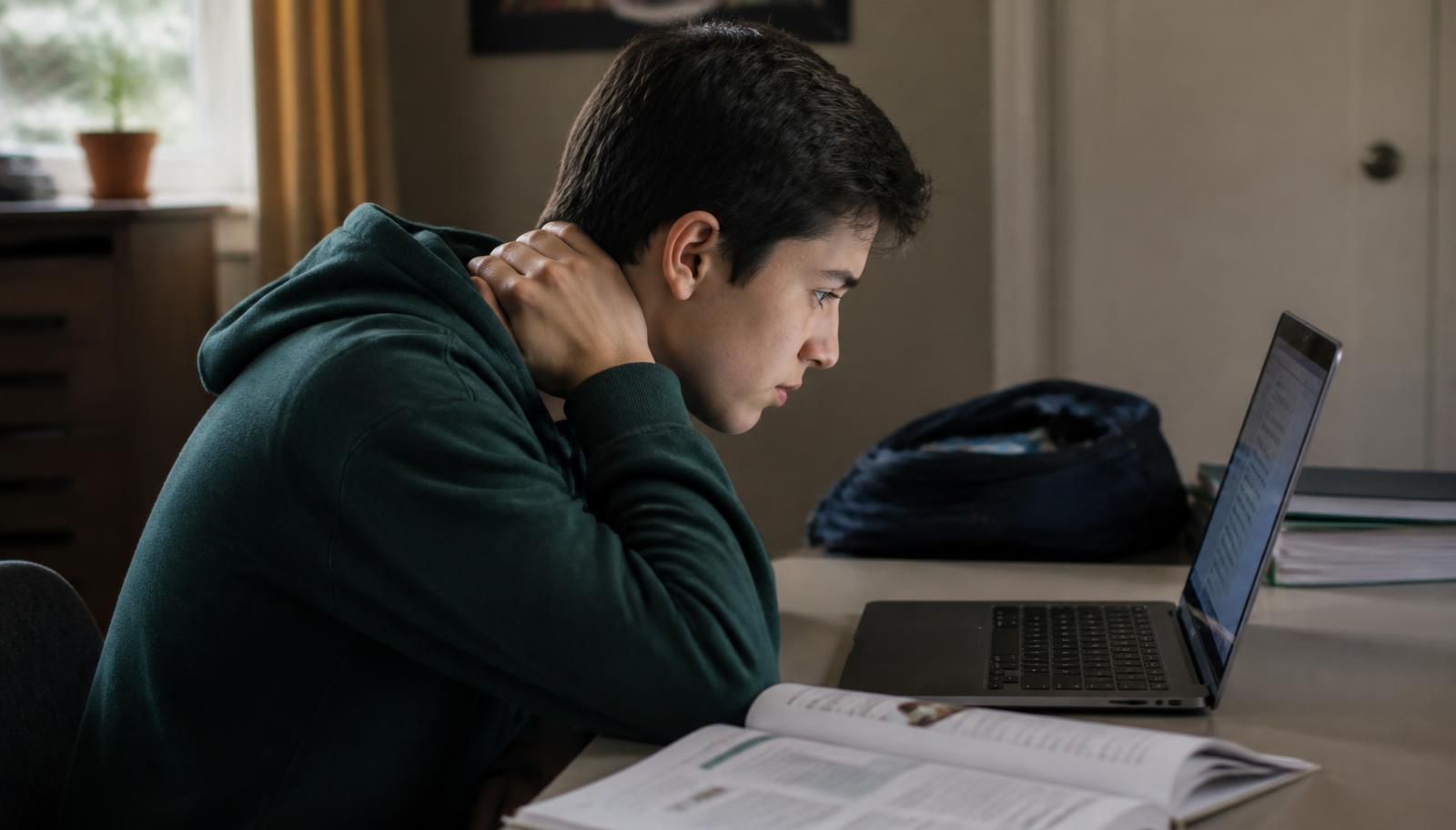
Every August, something predictable happens in our Dallas office: students and parents start calling about stiff necks, aching shoulders, and headaches that appear a few weeks into the semester. It's rarely one dramatic injury. It's the slow accumulation of hours spent leaning toward a screen, a backpack that's too heavy, less sleep, and more stress.
If you've been searching for answers about neck pain from studying, you're dealing with a very common — and very fixable — pattern.
Forward-Head Posture: The Root of Most Study-Related Neck Pain
Your head weighs roughly 10 to 12 pounds when it sits balanced over your shoulders. Tilt it forward to read a laptop or phone, and the effective load on your neck muscles climbs sharply with every degree of tilt. That's the mechanism behind what's often called "text neck," and the American Academy of Orthopaedic Surgeons' clinical overview of neck pain explains how sustained poor head and neck positioning strains the muscles and joints of the cervical spine.
Hold that posture for a 45-minute homework block, repeat it five or six times a day, and the deep neck flexors fatigue while the muscles along the base of the skull and upper shoulders stay locked in a constant low-grade contraction. That's the ache students describe as "tight" rather than "injured."
Why the Neck Turns Into a Headache
Headaches that start at the base of the skull and wrap forward behind the eyes are frequently cervicogenic — they originate in the neck rather than the head. The upper cervical joints share nerve pathways with the structures that carry head pain, so irritation in the neck can be perceived as a headache. Research summarized in the National Library of Medicine's review of cervicogenic headache describes exactly this referral pattern, and notes that treating the neck often resolves the headache.
For students, this shows up as an afternoon headache that worsens with more screen work, improves on weekends, and comes right back on Monday.
Screen Time Is Only Part of the Problem
Four other school-year factors quietly amplify the same strain:
- Heavy backpacks. A pack loaded beyond about 10 to 15 percent of a student's body weight, or worn on one shoulder, shifts posture forward and pulls the shoulders out of alignment. The American Academy of Pediatrics' backpack safety guidance recommends both straps, a snug fit, and keeping the load light.
- Long, unbroken study sessions. Static posture is harder on tissue than movement. The problem is often not how a student sits, but how long they sit that way without changing position.
- Stress. Exam pressure and deadlines raise resting muscle tone in the upper trapezius and jaw — the same muscles already fatigued by posture.
- Short sleep. Less sleep means less tissue repair, plus more time in awkward positions if a student falls asleep on the couch or on top of a laptop.
What Actually Helps at Home
Small adjustments compound quickly:
- Raise the screen. Lift the laptop or monitor so the top third is at eye level, and use an external keyboard.
- Set a 30-minute movement timer. Stand, roll the shoulders, and look at something far away for 30 seconds.
- Do chin tucks. Gently draw the chin straight back — not down — hold five seconds, repeat ten times. This trains the deep neck flexors that forward-head posture shuts off.
- Lighten and level the backpack. Both straps, heaviest items closest to the back, and nothing that isn't needed today.
- Protect sleep. A consistent bedtime and a supportive pillow that keeps the neck neutral matter more than any stretch.
When It's Time for Professional Care
Home strategies handle the mild cases. Consider an evaluation when pain lasts longer than two weeks, headaches happen more than a couple of times a week, there's numbness or tingling into the arm or hand, or the pain is interfering with school, sports, or sleep.
At Back to Health Physical Medicine, care for neck pain starts with figuring out which structures are actually driving the symptoms. From there, treatment usually combines:
- Chiropractic care to restore motion in restricted cervical segments and reduce the joint irritation that feeds cervicogenic headaches.
- Physical rehabilitation to rebuild deep neck flexor and mid-back strength, so better posture becomes sustainable instead of something a student has to constantly remember.
- Soft tissue work to release the chronically tight suboccipital and upper trapezius muscles.
The goal isn't just short-term relief before the next exam. It's changing the mechanics so the pain doesn't return every semester.
Getting Ahead of It This School Year
Neck pain and headaches are common among students, but they aren't something to simply push through. When posture, load, stress, and sleep all shift at once in August, the neck is usually the first place it shows up — and it responds well to care that addresses the cause rather than masking the symptom.
If your student is dealing with recurring neck pain or headaches, schedule an evaluation at our Dallas clinic and we'll build a plan around their schedule.