
Can Red Light Therapy Help Speed Recovery After Exercise or Injury?
Sore muscles and slow-healing injuries can keep you on the sidelines. Red light therapy is gaining attention as a non-invasive way to support cellular repair, reduce inflammation, and help the body recover faster after exercise or injury.
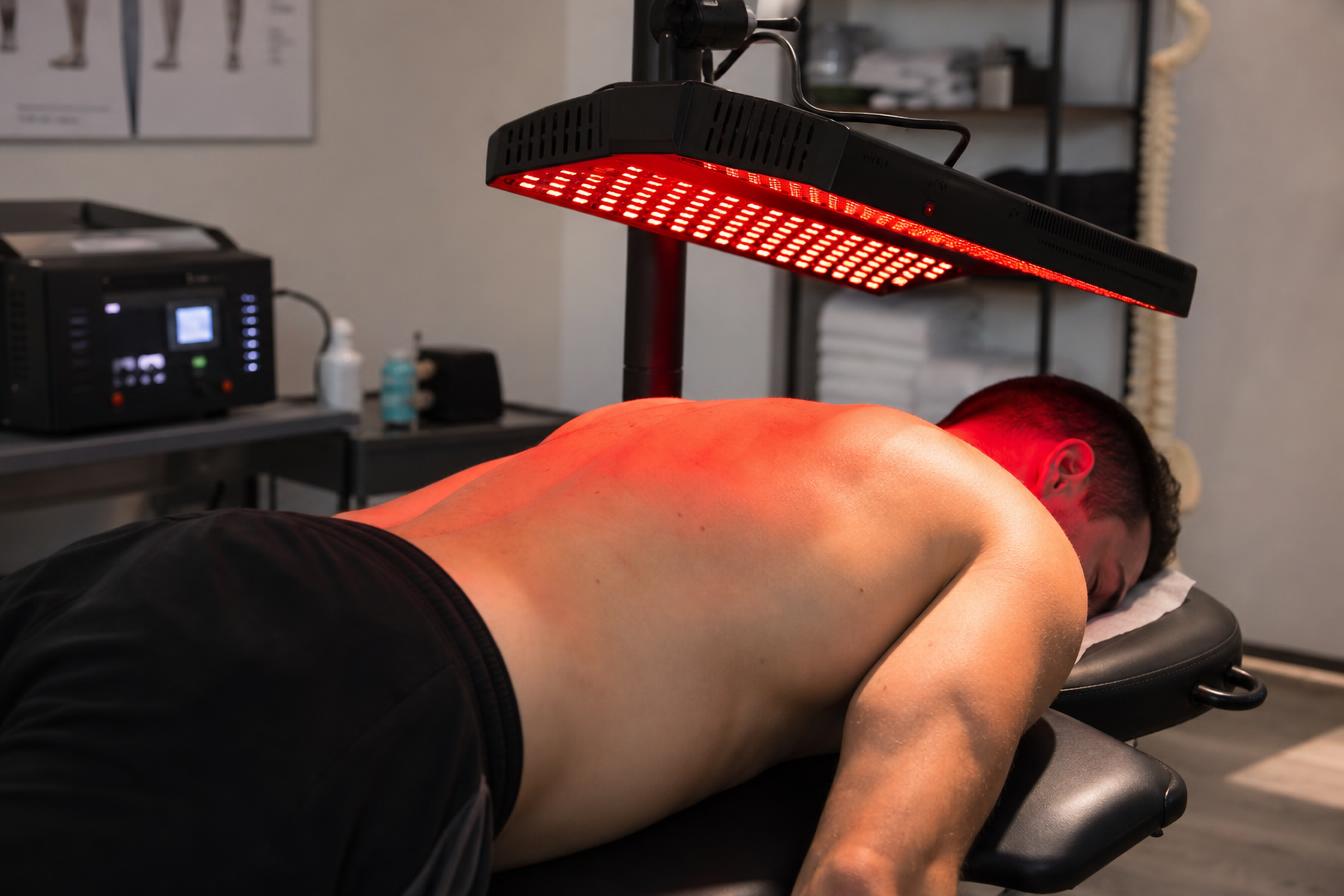
Whether you're training for your next race, pushing through a tough workout, or recovering from a sprain or strain, one thing is universal: recovery takes time. And when soreness lingers or an injury heals slowly, it's tempting to reach for ice packs, anti-inflammatories, or just wait it out.
But what if light could help speed the process?
Red light therapy for recovery — also called photobiomodulation or low-level light therapy — uses specific wavelengths of red and near-infrared light to stimulate cellular energy production. It's non-invasive, painless, and increasingly used by athletes, physical therapists, and recovery clinics to help the body bounce back faster.
At Back to Health Physical Medicine in Dallas, we use red light therapy as part of integrated recovery plans for patients dealing with exercise-related soreness, soft-tissue injuries, and chronic musculoskeletal complaints.
What Red Light Therapy Actually Does
Red light therapy works at the cellular level. The mitochondria inside your cells act like tiny power plants, producing the ATP energy your tissues need to repair and function. Red and near-infrared light penetrate the skin and are absorbed by a mitochondrial enzyme called cytochrome c oxidase, which helps increase ATP production.
More cellular energy means:
- Faster tissue repair — muscles, tendons, and skin can heal more efficiently
- Reduced oxidative stress — less cellular damage from intense exercise or injury
- Improved circulation — better blood flow brings oxygen and nutrients to recovering tissues
- Calmed inflammation — a more balanced inflammatory response without suppressing healing
A review of the mechanisms and efficacy of photobiomodulation therapy explains that red and near-infrared light can stimulate mitochondrial activity, increase ATP production, and modulate inflammation — effects that may support tissue repair and pain relief, though outcomes vary by condition and device.
Red Light Therapy for Exercise Recovery
After a hard workout, your muscles experience microtrauma. That's normal — and it's how they get stronger. But the soreness, stiffness, and temporary weakness that follow can limit your next session or competition.
Red light therapy may help reduce delayed-onset muscle soreness (DOMS) and support faster recovery between bouts of exercise. A 2022 meta-analysis of randomized controlled trials published in Sports Health found that low-level laser therapy improved muscular performance and soreness recovery in athletes.
For Dallas athletes and active adults, that can mean:
- Less downtime between training sessions
- Reduced muscle stiffness and soreness
- Better performance consistency
- Lower risk of overuse injuries caused by incomplete recovery
We often combine red light therapy with physical rehabilitation to address both the cellular recovery process and the movement patterns that contribute to soreness in the first place.
Red Light Therapy for Injury Recovery
Injuries like strains, sprains, tendon irritation, and overuse conditions often involve inflammation and slow tissue healing. Red light therapy doesn't replace hands-on care or rehab, but it can be a valuable adjunct.
The National Institute of Arthritis and Musculoskeletal and Skin Diseases notes that recovery from sports injuries typically involves managing inflammation, restoring movement, and supporting tissue healing — goals that align with how red light therapy is thought to work.
At our Dallas clinic, red light therapy is commonly used alongside:
- Chiropractic care to restore joint motion and reduce mechanical stress on healing tissues
- Physical rehabilitation to rebuild strength, flexibility, and coordination
- Regenerative medicine and other biologic therapies for more complex or chronic injuries
This layered approach addresses recovery from multiple angles — cellular, mechanical, and functional — rather than treating symptoms in isolation.
What to Expect During a Red Light Therapy Session
A typical session is straightforward. The patient sits or lies comfortably while a panel or handheld device delivers red and near-infrared light to the target area. Sessions usually last 10 to 20 minutes. The treatment is warm and relaxing, not painful, and there's no downtime afterward.
Because the effects are cumulative, red light therapy works best as part of a structured plan rather than a one-time fix. The number of sessions depends on the condition, severity, and whether it's being combined with other therapies.
Is Red Light Therapy Right for You?
Red light therapy is generally considered safe and well-tolerated, but it's not appropriate for everyone. People with certain photosensitive conditions, those taking medications that increase light sensitivity, or individuals with active cancer should consult their provider before starting treatment.
You may be a good candidate if you:
- Experience lingering muscle soreness after workouts
- Are recovering from a soft-tissue injury and want to support healing
- Have chronic joint or tendon discomfort
- Want to enhance recovery as part of a broader physical medicine plan
Speed Up Recovery the Smart Way
Red light therapy won't replace smart training, good sleep, proper nutrition, or skilled hands-on care. But as part of a complete recovery strategy, it can give your cells an extra push toward healing.
If you're in Dallas and curious whether red light therapy for recovery could help you train harder, heal faster, or move with less soreness, schedule a consultation at Back to Health Physical Medicine. We'll evaluate your goals and build a plan that fits your body — not a generic protocol.