
Living With Chronic Knee Pain? How Regenerative Medicine May Support Recovery
Chronic knee pain can make every step feel like a decision. Before considering surgery, it's worth exploring how regenerative medicine may support your body's own ability to heal — reducing pain and restoring function without an operating room.
Climbing stairs. Getting out of the car. Standing up after a movie. When your knee hurts every day, even the smallest activities become negotiations with pain. And once you've tried rest, bracing, anti-inflammatories, and maybe a cortisone shot or two, the next conversation often turns to surgery.
But surgery isn't the only next step — and for many people, it shouldn't be the first one either. Regenerative medicine for knee pain offers a non-surgical path that works with your body's natural healing systems instead of replacing the joint outright.
At Back to Health Physical Medicine in Dallas, we help patients use regenerative therapies to calm chronic knee pain, protect the joint, and get back to the activities that matter.
Why Chronic Knee Pain Is So Hard to Shake
The knee is one of the most mechanically stressed joints in the body. It absorbs load with every step, stabilizes you when you pivot, and depends on healthy cartilage, ligaments, tendons, and meniscus tissue to work smoothly.
Common drivers of chronic knee pain include:
- Osteoarthritis and cartilage wear
- Meniscus tears and degeneration
- Ligament and tendon injuries that never fully healed
- Patellofemoral pain and tracking issues
- Post-surgical pain that lingers after a prior procedure
According to the American Academy of Orthopaedic Surgeons, osteoarthritis is one of the most common causes of chronic joint pain in adults — and the knee is one of the joints it affects most often. The tricky part: cartilage has a very limited blood supply, which is why traditional treatments often calm symptoms without truly supporting healing.
That's the gap regenerative medicine is designed to fill.
What Regenerative Medicine Actually Is
Regenerative medicine is a category of treatments that use biologic materials to support your body's own repair processes. Instead of masking pain or removing tissue, these therapies aim to stimulate healing at the source.
The National Institute of Arthritis and Musculoskeletal and Skin Diseases describes regenerative medicine as an emerging field that seeks to restore or establish normal function by supporting the body's natural healing capacity — often using cells, growth factors, or biologic scaffolds.
For chronic knee pain, the most commonly used regenerative approaches include:
- Platelet-rich plasma (PRP) — concentrated healing factors from your own blood
- Cellular therapies using biologic tissue rich in growth factors
- A2M (alpha-2-macroglobulin) injections that help neutralize enzymes that break down cartilage
- Prolotherapy to stimulate soft-tissue repair around unstable joints
Each of these works differently, but they share a common goal: giving the knee the biological signals and building blocks it needs to heal — not just quiet down temporarily.
How Regenerative Medicine May Help the Knee
Well-selected regenerative therapies may:
- Reduce inflammation inside and around the joint
- Support cartilage and soft-tissue repair
- Improve joint lubrication and function
- Decrease pain with movement and weight-bearing
- Delay or, in some cases, help patients avoid surgery
A 2021 systematic review published in the American Journal of Sports Medicine found that intra-articular platelet-rich plasma injections produced clinically meaningful improvements in pain and function in patients with knee osteoarthritis, with effects that often outperformed hyaluronic acid at longer follow-up.
Results vary based on the severity of the joint damage, the specific therapy used, and how well the treatment is paired with rehabilitation. That's why a proper evaluation matters more than any single injection.
Why Regenerative Care Works Best Inside a Complete Plan
An injection alone doesn't fix a knee. The joint got painful for a reason — usually a mix of mechanical overload, muscle weakness, joint restriction, and tissue breakdown. Regenerative medicine works far better when it's part of a plan that also addresses those drivers.
At Back to Health Physical Medicine, we typically combine regenerative medicine with:
- Chiropractic care to restore proper motion to the hip, knee, and ankle, so load distributes evenly instead of overloading the injured area.
- Physical rehabilitation to rebuild the quadriceps, glutes, and hip stabilizers that protect the knee.
- Modalities like red light therapy to support tissue recovery between visits.
This layered approach gives the biology a chance to work and the mechanics a chance to change — which is what turns short-term pain relief into long-term function.
Who Is a Good Candidate?
Regenerative medicine isn't right for every knee, but it's worth evaluating if you:
- Have chronic knee pain that hasn't responded to rest, medication, or standard therapy
- Have been told you need a knee replacement but want to explore alternatives first
- Are dealing with early-to-moderate arthritis, meniscus wear, or lingering post-injury pain
- Want to stay active without relying on ongoing anti-inflammatories or steroid shots
The best candidates usually have a joint that's still structurally salvageable, realistic expectations, and a willingness to pair the therapy with a rehab plan.
What to Expect at Back to Health Physical Medicine
Our regenerative medicine process starts with a detailed evaluation of your knee — history, exam, movement assessment, and imaging review when appropriate. From there, we recommend a plan that fits your joint, not a one-size-fits-all protocol.
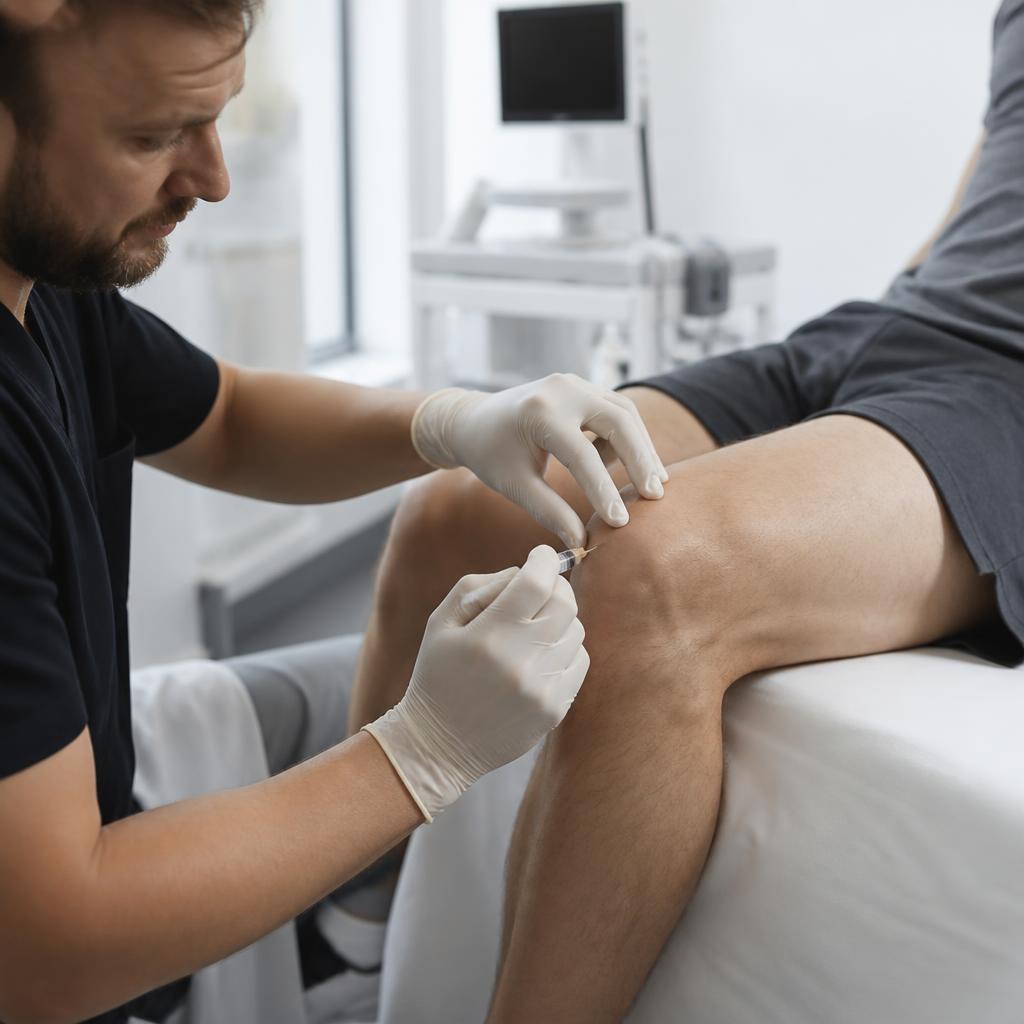
If regenerative therapy is a fit, the injections themselves are typically an in-office procedure with minimal downtime. Most patients return to daily activity quickly and follow a progressive rehab plan to protect the gains.
We're honest about what regenerative medicine can and can't do. When surgery is truly the right answer, we'll tell you. But for many patients with chronic knee pain, there's meaningful room to heal before that becomes necessary.
Take the Next Step Toward Knee Recovery
If chronic knee pain is limiting how you move, work, or enjoy life, you don't have to choose between endless anti-inflammatories and jumping straight to surgery. Regenerative medicine may offer a middle path that supports real healing.
Schedule a knee evaluation at Back to Health Physical Medicine in Dallas and let's build a plan designed to help your knee recover — not just quiet down.