
Back to School Is Hard on Teachers' Backs Too
Teachers stand for hours, bend over desks, haul supplies, and hunch over classroom computers. Here's why teacher back pain spikes every fall — and the conservative care options that help.
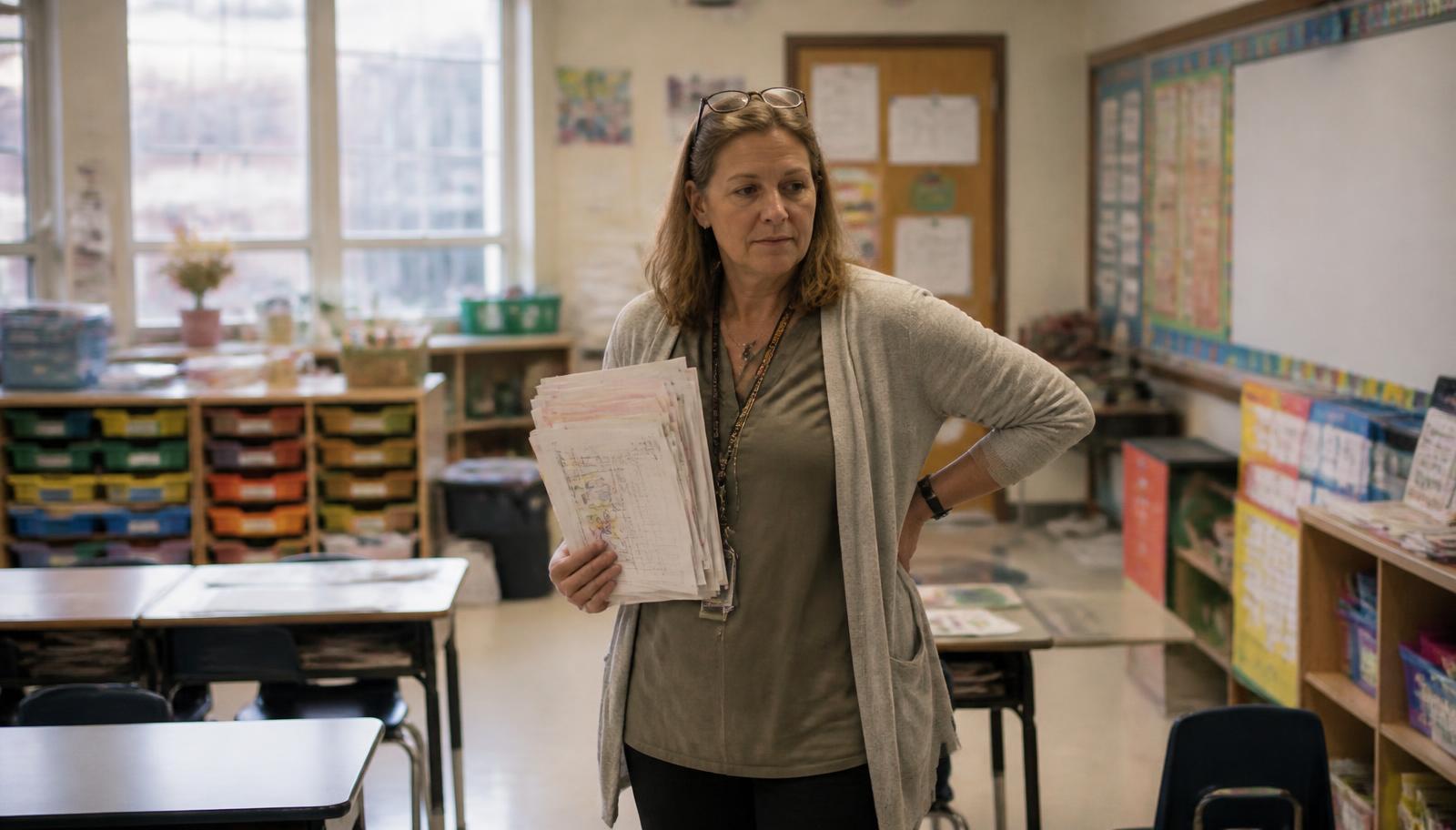
Every fall, our Dallas office sees the same wave of patients: teachers three or four weeks into the semester whose backs have finally had enough. Summer offered a break from the physical demands of the job. Late August brings all of them back at once — twelve-hour days on hard floors, bending over student desks, carrying boxes of supplies, and finishing lesson plans hunched over a laptop long after the last bell.
Teacher back pain isn't a sign of getting older or being out of shape. It's the predictable result of a job that combines prolonged static postures with repetitive bending and lifting, day after day.
Standing All Day Is Not the Same as Being Active
There's a common assumption that a job on your feet is good for your back. In practice, prolonged static standing is one of the harder loads on the lumbar spine. When you stand in roughly the same place for hours — at the front of the room, at a lab bench, in a hallway during passing period — the postural muscles of the low back and hips stay in constant low-level contraction, the pelvis tends to drift forward, and the lumbar curve deepens. Blood flow to those working muscles drops, fatigue accumulates, and by fifth period the ache sets in.
Hard classroom flooring makes it worse. Concrete under thin tile gives nothing back, so every hour of standing is absorbed by joints and soft tissue instead. The American Academy of Orthopaedic Surgeons' overview of low back pain describes how muscle strain and mechanical overload of the lumbar spine produce exactly this kind of activity-related pain.
The Other Four Positions Teachers Live In
Standing is only one part of the pattern. Most teachers cycle through several demanding positions all day:
- Bending over student desks. Leaning forward with a rounded back — often dozens of times a class period — loads the lumbar discs far more than standing upright does.
- Sitting in adult-unfriendly chairs. Small chairs, reading nooks, and circle time put the hips below the knees and flatten the lumbar curve.
- Carrying and lifting. Bins of books, laminated materials, projectors, rolling carts across campus, and sometimes young children.
- Working at the classroom computer. A monitor set too low and a keyboard at the wrong height pull the head forward, which is where teacher neck pain and end-of-day headaches come from. OSHA's computer workstation ergonomics guidance covers the monitor height, chair, and keyboard positioning that reduce that strain.
Grading at a kitchen table or on the couch at night simply extends the same posture into the evening.
Practical Changes That Help During the School Day
You can't redesign a classroom, but small adjustments meaningfully reduce load:
- Use a footrest while standing. Keep a small step stool or a low box at the front of the room and rest one foot on it, alternating every few minutes. This unloads the lumbar spine and is one of the single most effective changes for standing pain.
- Invest in supportive shoes and an anti-fatigue mat. Cushioned, structured footwear plus a mat where you stand most makes hard flooring far more tolerable.
- Squat instead of stooping. When you go down to a student's desk, bend at the hips and knees with the back neutral rather than folding forward at the waist.
- Raise your monitor. Get the top third of the screen to eye level and pull the keyboard close. Even a stack of textbooks under a laptop helps.
- Move during transitions. Between classes, walk, do a few standing back extensions, and roll the shoulders. Changing position beats holding any single "correct" posture.
- Lift with a plan. Test the weight, keep the load close to your body, pivot with your feet instead of twisting, and use a cart when one is available.
The National Library of Medicine's MedlinePlus resource on back pain reinforces the same core principles — staying active, using good body mechanics, and addressing pain early rather than waiting for it to become chronic.
When to Get It Evaluated
Consider a professional evaluation if the pain has lasted more than two weeks, wakes you at night, radiates into the hip or down the leg, comes with numbness or tingling, or you're relying on over-the-counter medication just to get through the week.
At Back to Health Physical Medicine, care for low back pain starts with identifying what's actually generating the symptoms — joint restriction, muscular overload, disc involvement, or a combination. Depending on the findings, a plan may include:
- Chiropractic care to restore motion in restricted lumbar and thoracic segments and relieve the joint irritation that builds up over a long standing day.
- Physical rehabilitation to strengthen the hips, core, and mid-back so your body tolerates a full teaching day without fatiguing into poor posture.
- Non-surgical spinal decompression for teachers with disc-related pain or symptoms radiating into the leg, using gentle traction to reduce pressure on the disc and nerve root.
- Red light therapy to support cellular recovery and help calm inflammation in overworked tissue.
- Shockwave therapy for stubborn soft-tissue and tendon pain that hasn't responded to rest and stretching.
Most teachers we see are looking for options that don't require time off, injections, or surgery — which is exactly what conservative, in-office care is designed to provide.
Don't Wait for the Winter Break
The pattern we see most often is a teacher who pushes through the fall semester, hopes the holidays will fix it, and returns in January with the same pain plus several months of compensation habits layered on top. Addressing it in September is far easier than untangling it in the spring.
If your back or neck is already protesting a few weeks into the school year, schedule an evaluation at our Rambler Road clinic in Dallas. We'll look at how your teaching day actually loads your spine and build a plan around it.