
Sciatica That Won't Quit? How Spinal Decompression May Help Relieve Nerve Pressure
If sciatica keeps flaring back up no matter what you try, the problem is usually pressure on the nerve — not the nerve itself. Here's how non-surgical spinal decompression works and why it may finally give you lasting relief.
That deep, burning pain that starts in your low back and shoots down your leg. The numbness in your calf. The tingling in your foot that won't go away. If you've been living with sciatica for weeks — or months — you already know it's not something you can just stretch or ignore into submission.
Sciatica affects up to 40% of adults at some point in their lives, and for many, it becomes a recurring problem. The reason it keeps coming back usually isn't the nerve itself — it's the pressure on the nerve from a bulging disc, degenerated joint, or narrowed spinal canal. That's where spinal decompression for sciatica enters the picture.
At Back to Health Physical Medicine in Dallas, we use non-surgical spinal decompression to gently take pressure off irritated nerves — so the body can finally heal instead of just coping.
What Is Sciatica, Really?
"Sciatica" is a symptom, not a diagnosis. It describes pain, tingling, numbness, or weakness that travels along the path of the sciatic nerve — the longest nerve in the body, which runs from the low back through the hip and down the leg.
Most true sciatica is caused by compression or irritation of a nerve root in the lumbar spine. Common culprits include:
- Herniated or bulging discs pressing on a nerve root
- Degenerative disc disease narrowing the space where the nerve exits
- Spinal stenosis — a narrowing of the spinal canal
- Facet joint arthritis and bone spurs
- Piriformis or deep gluteal tightness irritating the nerve downstream
Classic symptoms include sharp or burning pain radiating from the low back into the buttock and down one leg, numbness or tingling in the calf or foot, weakness when climbing stairs, and pain that gets worse with sitting, bending, or coughing. Left unaddressed, these symptoms can become chronic — which is exactly why so many patients end up asking about surgery.
The good news: according to a review published in the BMJ, the majority of sciatica cases improve with conservative, non-surgical care when the underlying nerve pressure is properly addressed.
Why Sciatica Keeps Coming Back
If you've tried rest, ibuprofen, stretching, or even injections and the pain keeps returning, it's not because your body is broken. It's usually because the mechanical pressure on the nerve was never actually relieved.
Painkillers calm inflammation temporarily. Stretching may loosen tight muscles. But if a disc is still bulging into the nerve root, or a joint space is still collapsed, the irritation restarts as soon as the meds wear off or you sit at your desk for a few hours. That's the cycle spinal decompression is designed to break.
How Non-Surgical Spinal Decompression Works
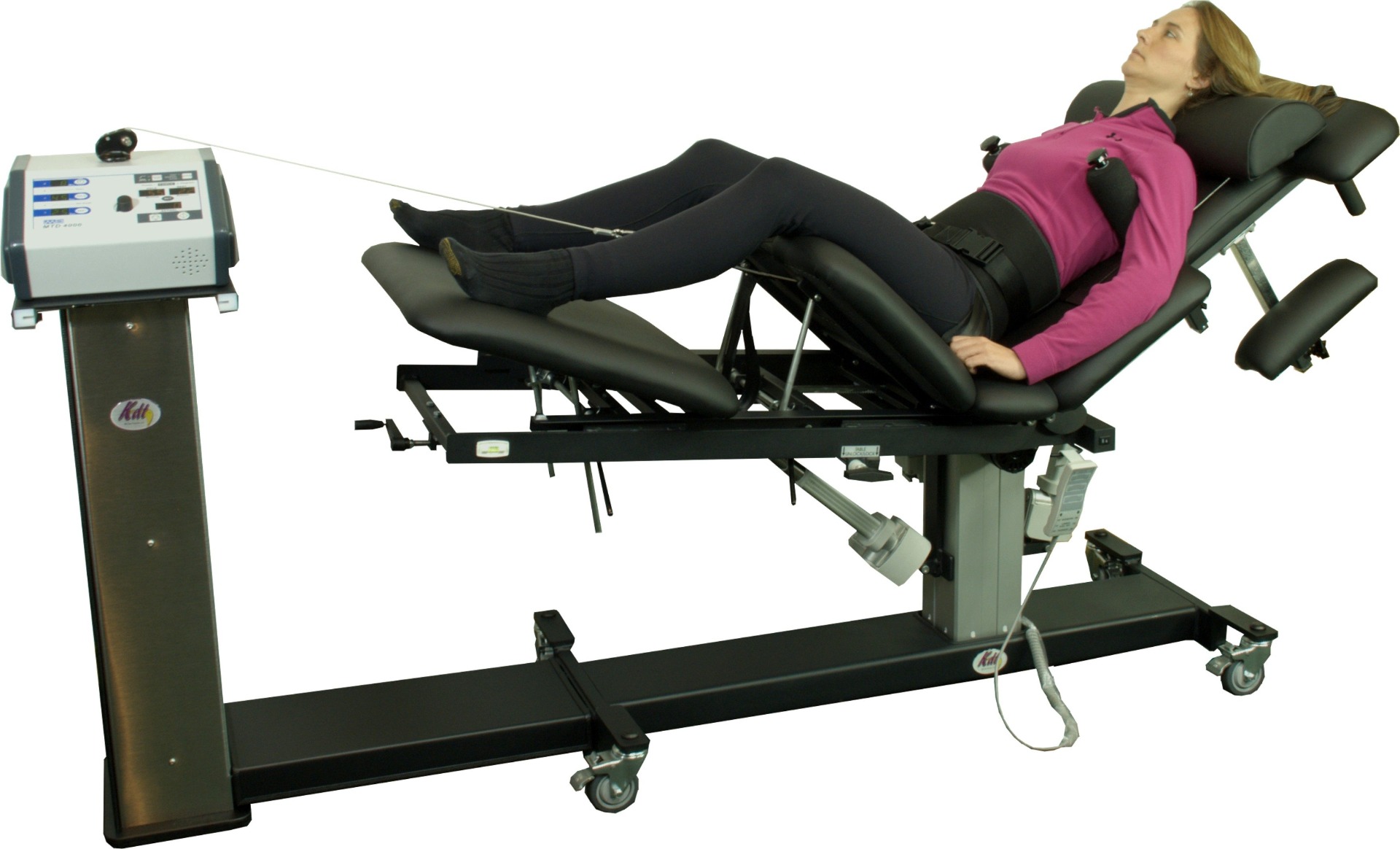
Non-surgical spinal decompression is a specialized form of motorized traction. You lie comfortably on a computer-controlled table while gentle, precise forces are applied to the spine in a specific rhythm of pull and release.
That controlled cycle does something manual traction can't: it creates negative pressure inside the disc. This gentle vacuum effect can:
- Reduce pressure on compressed nerve roots
- Help retract bulging or herniated disc material away from the nerve
- Improve blood flow, oxygen, and nutrient delivery to the disc so it can heal
- Restore height to collapsed disc spaces
- Relieve stress on facet joints and surrounding soft tissue
Sessions are typically 20–30 minutes and are surprisingly relaxing — most patients describe a slow, gentle stretch, not the aggressive yank many people imagine. A double-blind randomized controlled trial indexed on PubMed reported that non-surgical spinal decompression therapy produced significant reductions in disc herniation size and pain in patients with lumbar disc herniation compared to conventional physiotherapy alone.
Why Spinal Decompression Works So Well for Sciatica
Sciatica is almost always a pressure problem. Spinal decompression is one of the only non-surgical tools that directly and repeatedly lowers that pressure at the source. Instead of masking pain, it gives the disc and nerve room to recover.
Patients typically notice:
- Less leg pain and radiating symptoms
- Reduced numbness and tingling
- Easier sitting, standing, and walking
- Better sleep as nighttime nerve pain calms down
- Longer stretches between flare-ups
Because decompression addresses the mechanical driver of sciatica — not just the symptoms — the results tend to hold, especially when combined with a smart rehab plan.
What a Complete Sciatica Recovery Plan Looks Like
Decompression is powerful, but sciatica rarely resolves from one treatment alone. At our Dallas clinic, we build layered programs that give the nerve the best possible chance to heal — and stay that way.
1. Detailed Evaluation
Before anything else, we determine what is compressing the nerve and where. That includes a thorough exam, orthopedic and neurologic testing, posture and gait analysis, and imaging review when appropriate. Different sciatica causes need different plans.
2. Non-Surgical Spinal Decompression
For disc-related sciatica, spinal decompression is often the centerpiece. Most patients complete a series of sessions over several weeks so the disc has consistent, repeated relief from load.
3. Targeted Chiropractic Care
Gentle chiropractic adjustments restore motion to restricted lumbar and pelvic joints. When those joints move properly again, load distributes evenly across the spine instead of piling onto the injured segment — which protects your decompression progress.
4. Physical Rehabilitation
Nerves calm down when the surrounding structures get stronger. Our physical rehabilitation program uses core stabilization, glute activation, hip mobility work, and nerve gliding exercises to rebuild support around the low back and prevent re-injury.
5. Lifestyle and Ergonomic Coaching
Prolonged sitting, poor lifting mechanics, and weak hips will undo any treatment plan. We coach you through desk setup, sleep positions, safe lifting, and daily movement so the pressure doesn't rebuild the moment you leave the clinic.
Is Spinal Decompression Right for You?
Non-surgical spinal decompression may be a strong fit if you have:
- Chronic or recurring sciatica or leg pain
- A diagnosed herniated, bulging, or degenerative disc
- Numbness, tingling, or weakness in the leg or foot
- Persistent low back pain that flares with sitting or bending
- A history of failed conservative care (rest, meds, generic PT)
- A desire to avoid injections or surgery
It's not appropriate for everyone — certain conditions (severe osteoporosis, spinal fractures, some post-surgical hardware, pregnancy) require different approaches. That's why every patient starts with a full evaluation before we recommend a plan.
When to Consider Getting Evaluated Sooner
Most sciatica is safe to treat conservatively, but you should be seen promptly if you notice:
- Progressive weakness in the leg or foot
- Numbness in the groin or inner thighs
- Loss of bladder or bowel control
- Severe pain that isn't improving after a few weeks of self-care
These can signal more serious nerve involvement and shouldn't be ignored.
Get Real Sciatica Relief in Dallas
If sciatica keeps stealing your sleep, your workouts, and your ability to sit through a meeting — you don't have to live with it, and you don't have to jump straight to surgery. Spinal decompression for sciatica offers a proven, non-surgical path to relieve nerve pressure and give your body a real chance to heal.
Book a sciatica evaluation at Back to Health Physical Medicine in Dallas, and we'll build a personalized decompression and rehab plan to get you moving — and keep you pain-free.