
Recovering From a Sports Injury? Why Rehabilitation Matters After the Pain Fades
Once the sharp pain of a sports injury fades, it's tempting to jump back into your routine. But skipping rehabilitation can leave you weaker, less mobile, and more likely to get hurt again. Here's why rehab matters long after the pain is gone.
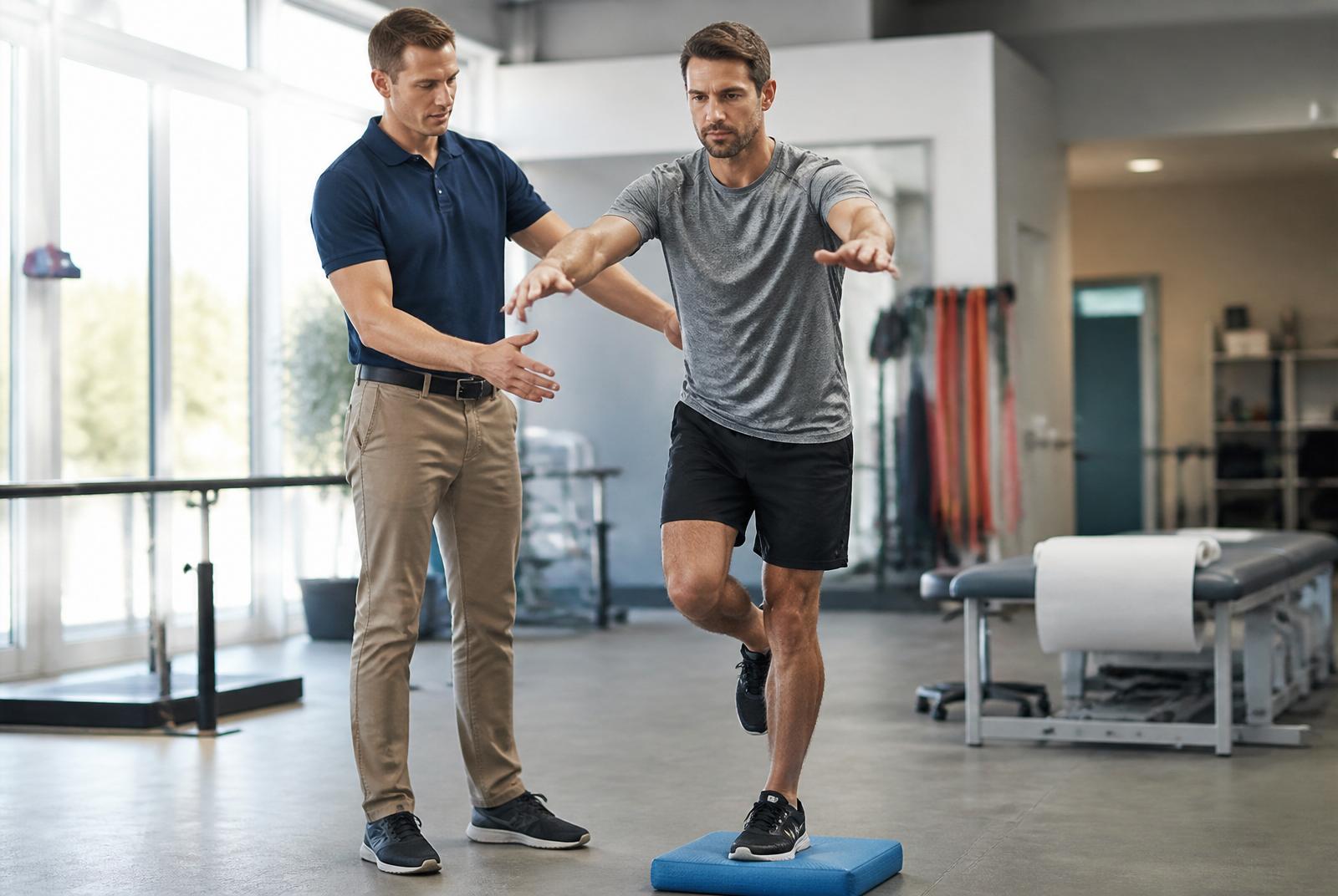
The ankle feels fine now. The shoulder doesn't ache when you sleep. The hamstring stretch that used to make you wince is finally comfortable again. So you're ready to return to full training, right?
Not so fast.
One of the biggest mistakes active people make after a sports injury is stopping care as soon as the pain disappears. Pain relief is an important milestone, but it's not the finish line. Without structured sports injury rehabilitation, the underlying weakness, stiffness, and movement dysfunction that caused the injury in the first place often remain — and they set the stage for the next injury.
At Back to Health Physical Medicine in Dallas, we see this pattern constantly. Patients come in after a second hamstring pull, a recurring rotator cuff issue, or a knee that "never felt quite right" after the original sprain healed. In most cases, the original injury healed — but the recovery never finished.
Why Pain Fading Doesn't Mean You're Fully Healed
Pain is a warning signal, not a measure of tissue health. When an injury is fresh, your nervous system creates pain to protect the damaged area. As swelling goes down and tissues knit back together, that signal naturally quiets. But quiet pain doesn't always mean the tissue has fully regained its strength, elasticity, or coordination.
According to the National Institute of Arthritis and Musculoskeletal and Skin Diseases, proper treatment for sports injuries often includes rest, ice, compression, elevation, and rehabilitation — with rehab playing a key role in restoring function and preventing future problems.
After an injury, the body tends to compensate. A sprained ankle leads to a limp, which tightens the hip. A sore shoulder causes the scapula to move differently, which overloads the rotator cuff. A pulled hamstring makes the nervous system guard the muscle, reducing its explosive capacity. These compensations don't resolve on their own. They need to be retrained.
What Sports Injury Rehabilitation Actually Does
Rehabilitation isn't just about doing exercises. It's about restoring the complete movement system so you can perform at your previous level — or higher — without breaking down again.
A well-designed physical rehabilitation program after a sports injury typically addresses:
- Range of motion. Restoring full, pain-free movement at the injured joint and the joints above and below it.
- Strength deficits. Rebuilding not just the injured muscle, but the stabilizers that protect it.
- Neuromuscular control. Retaining the brain's ability to fire muscles in the right sequence and with the right timing.
- Proprioception. Restoring your body's awareness of joint position, which is critical for cutting, jumping, and landing safely.
- Movement quality. Correcting the mechanics that contributed to the injury, from running form to squat depth to throwing mechanics.
- Load tolerance. Gradually reintroducing sport-specific stresses so tissues adapt instead of failing.
Cleveland Clinic explains that sport-specific rehabilitation helps athletes recover from injury and safely return to activity through targeted, sport-focused therapy — exactly the approach that produces durable return-to-sport outcomes.
The Reinjury Risk Is Real
Research consistently shows that incomplete rehabilitation is one of the strongest predictors of reinjury. A review of lower limb muscle reinjuries in athletes published in the Journal of Functional Morphology and Kinesiology emphasizes that moving from risk-factor identification to structured return-to-play strategies is essential for breaking the cycle of repeated injuries.
Common examples we see in our Dallas clinic include:
- Ankle sprains that heal but leave poor balance, leading to repeated rolls.
- Hamstring strains that feel fine at rest but fail under sprinting load.
- Shoulder impingement that returns because scapular control was never restored.
- Knee pain that comes back because hip and glute strength was neglected.
- Low back strains that recur because core stability wasn't rebuilt.
In every case, the original pain went away. But the system that produced the pain was never fully corrected.
What a Complete Sports Injury Rehabilitation Plan Looks Like
At Back to Health Physical Medicine, sports injury rehabilitation is built around the individual, the specific injury, and the demands of their sport or activity. A complete plan usually moves through distinct phases.
1. Acute Recovery and Protection
In the early phase, the goal is to calm inflammation, protect healing tissue, and maintain whatever movement is safe. This may include gentle mobility work, manual therapy, and modalities to support circulation and pain control.
2. Restore Motion and Early Loading
As pain allows, we introduce controlled movement and progressive loading. This phase prevents the joint from stiffening and begins rebuilding tissue tolerance without overstressing the injury.
3. Rebuild Strength and Stability
This is where many DIY recoveries fall short. We target the muscles that support the injured area — including the ones that seem unrelated but actually matter. For a knee, that often means hip and ankle work. For a shoulder, it means scapular and thoracic spine mobility. For a hamstring, it means posterior chain and eccentric strength.
4. Neuromuscular and Proprioceptive Training
Balance, coordination, and reactive control are what separate "healed" from "ready to play." We use unstable surfaces, sport-specific drills, and controlled perturbations to retrain the nervous system.
5. Sport-Specific Return to Play
The final phase reintroduces the actual movements, speeds, and loads of your activity. This might mean sprint mechanics, cutting drills, throwing progressions, or barbell movements — progressed gradually so the tissue adapts rather than fails.
How Chiropractic Care Supports the Rehabilitation Process
Many sports injuries involve joint dysfunction somewhere along the kinetic chain. A stiff mid-back changes shoulder mechanics. A restricted ankle changes knee load. A pelvis that doesn't move symmetrically changes hamstring demand.
Gentle chiropractic adjustments restore motion to restricted joints, which allows the rehabilitation exercises to work more effectively. When joints move properly, muscles fire better, compensation patterns fade, and load distributes more evenly across the body.
This is why our clinic combines physical rehabilitation with chiropractic care and other supportive therapies — so we're not just treating the injured tissue, but restoring the whole movement system.
When to Start Rehabilitation
The best time to start rehabilitation is as soon as it's safe after the acute injury. In many cases, that means beginning gentle mobility and activation work within days, not weeks. Waiting too long allows compensations to become entrenched and tissues to decondition, which makes the full recovery longer and harder.
You should be evaluated promptly if you notice:
- Pain that persists beyond a few days after injury
- Swelling that doesn't improve
- A joint that feels unstable or "gives way"
- Numbness, tingling, or weakness
- Pain that returns every time you try to resume activity
These signs suggest the injury needs professional guidance rather than rest alone.
Readers outside Dallas should seek a qualified provider in their own community; those in the Phoenix area can review local chiropractic and rehabilitation services at https://ahwatukeechiropractic.com/.
Don't Just Heal — Come Back Stronger
A sports injury can be a setback, but it can also be an opportunity. With the right rehabilitation plan, many athletes return not just to their previous level, but stronger, more resilient, and more aware of their body than before.
If you've recovered from the pain but still feel tentative, tight, or weaker on one side, your recovery isn't finished. Schedule a sports injury rehabilitation evaluation at Back to Health Physical Medicine in Dallas, and let's make sure your comeback is built to last.